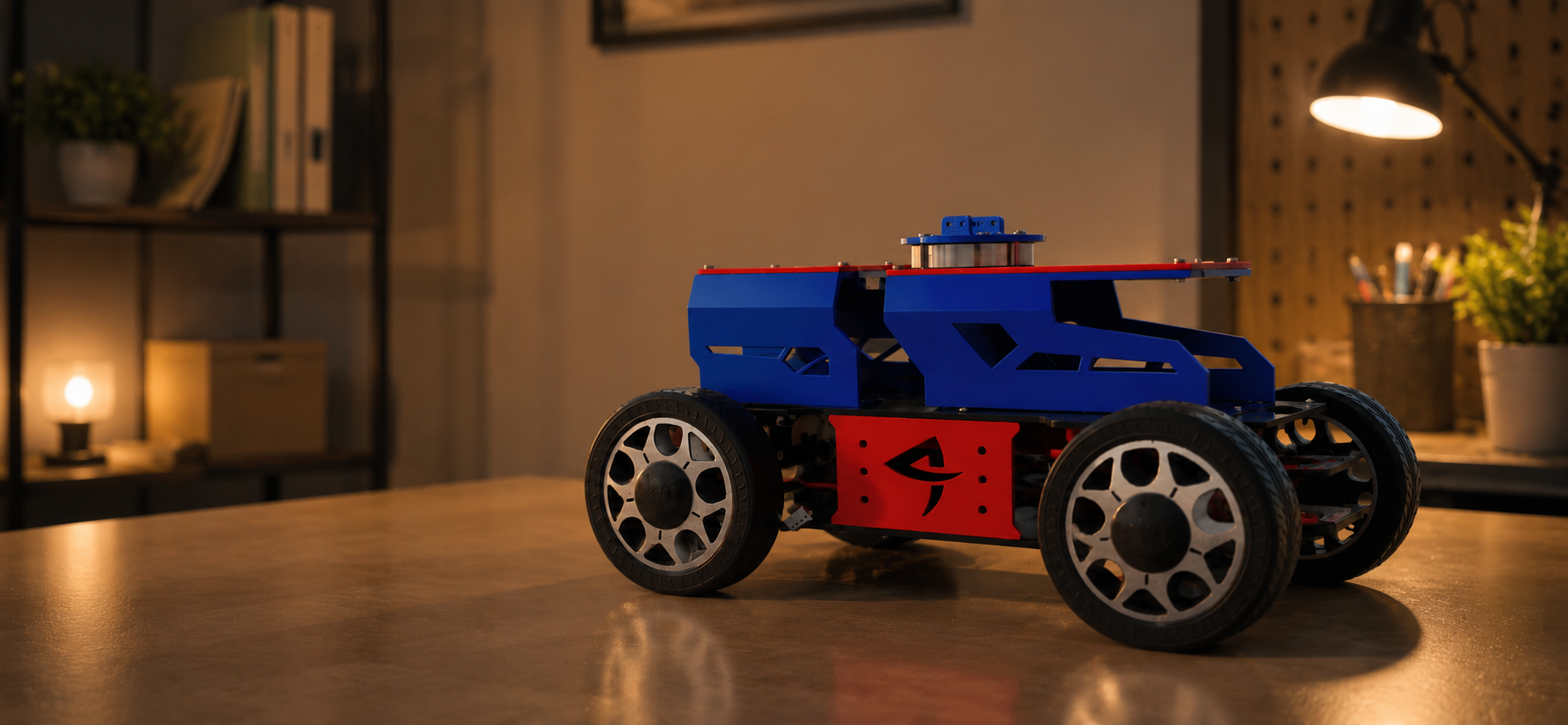
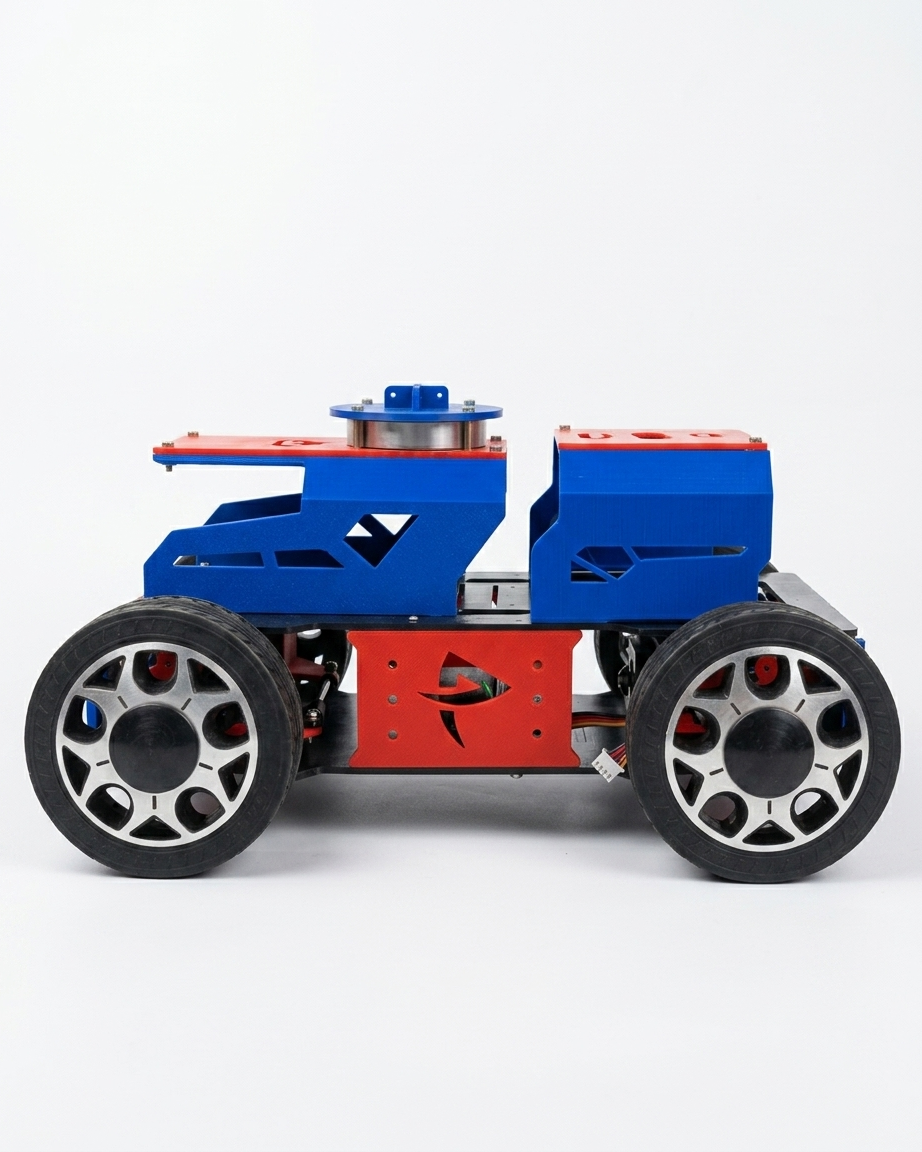
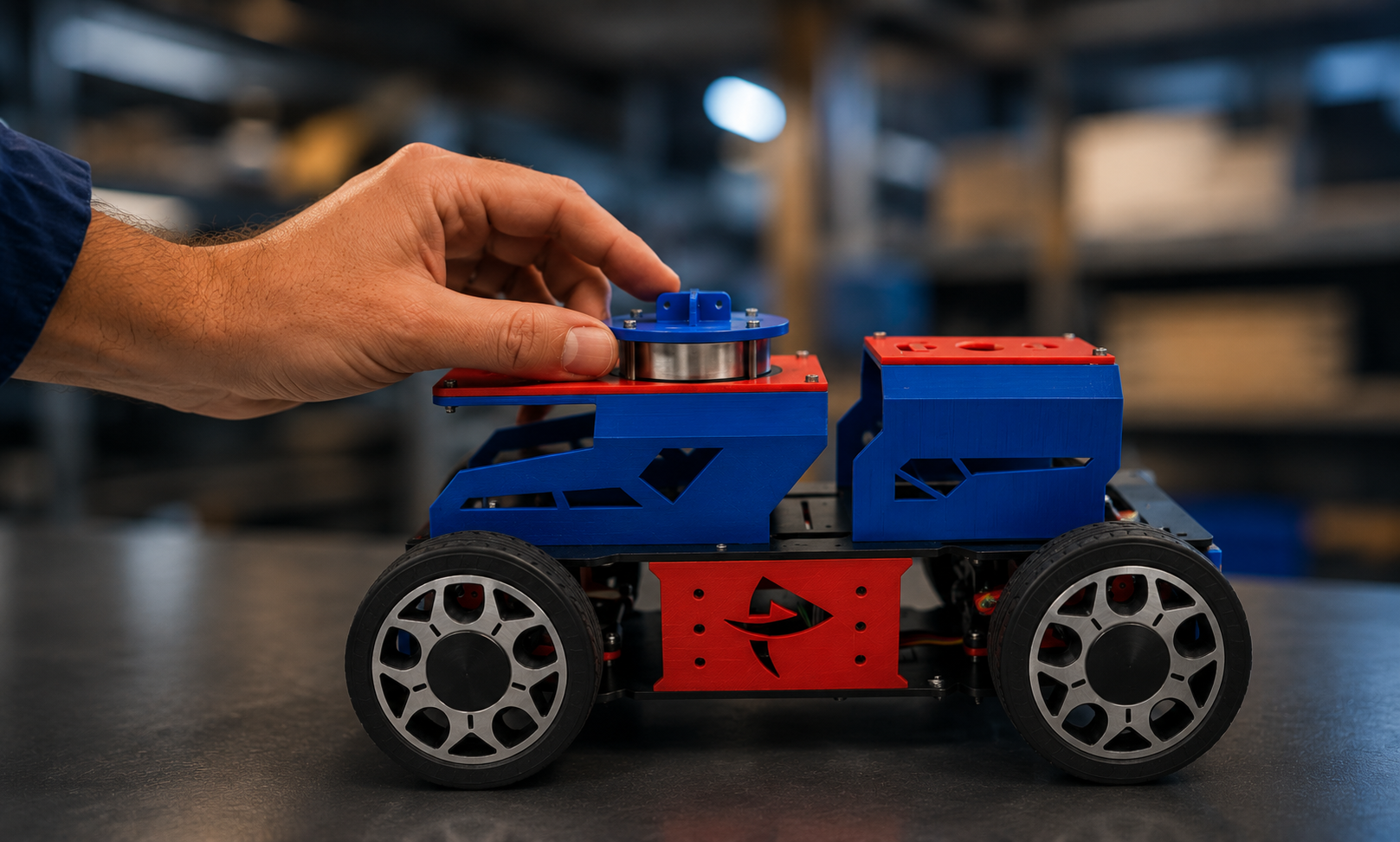
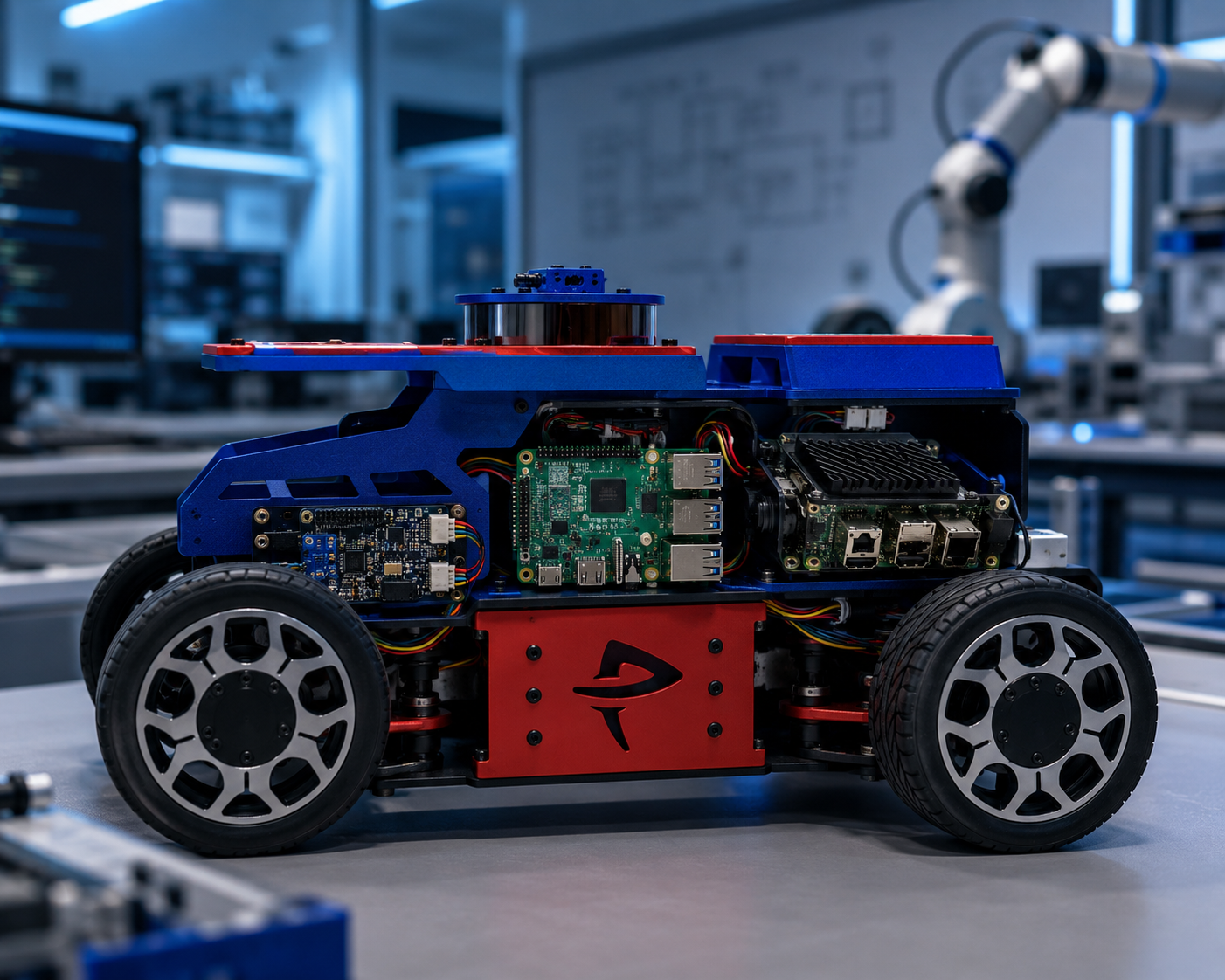
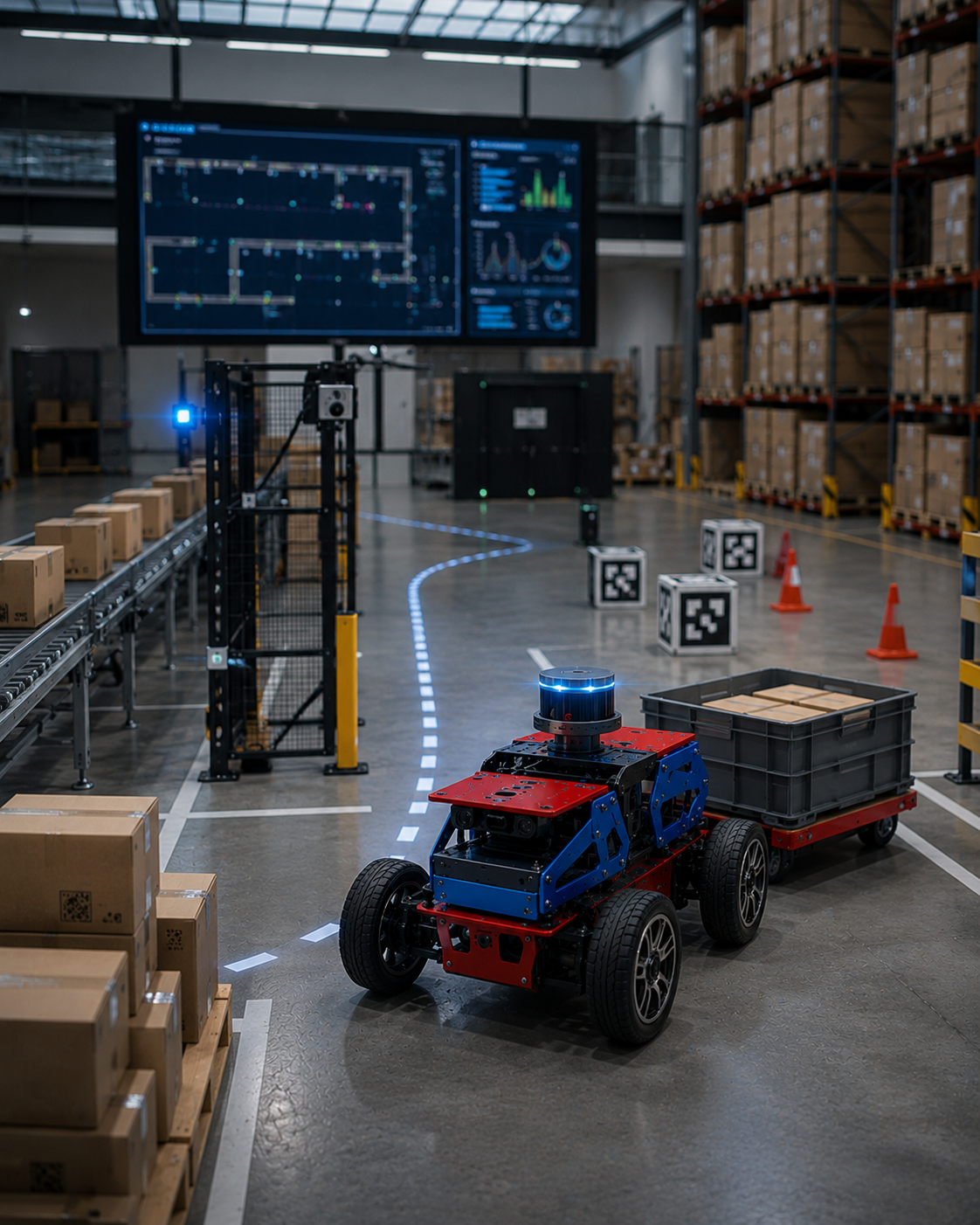
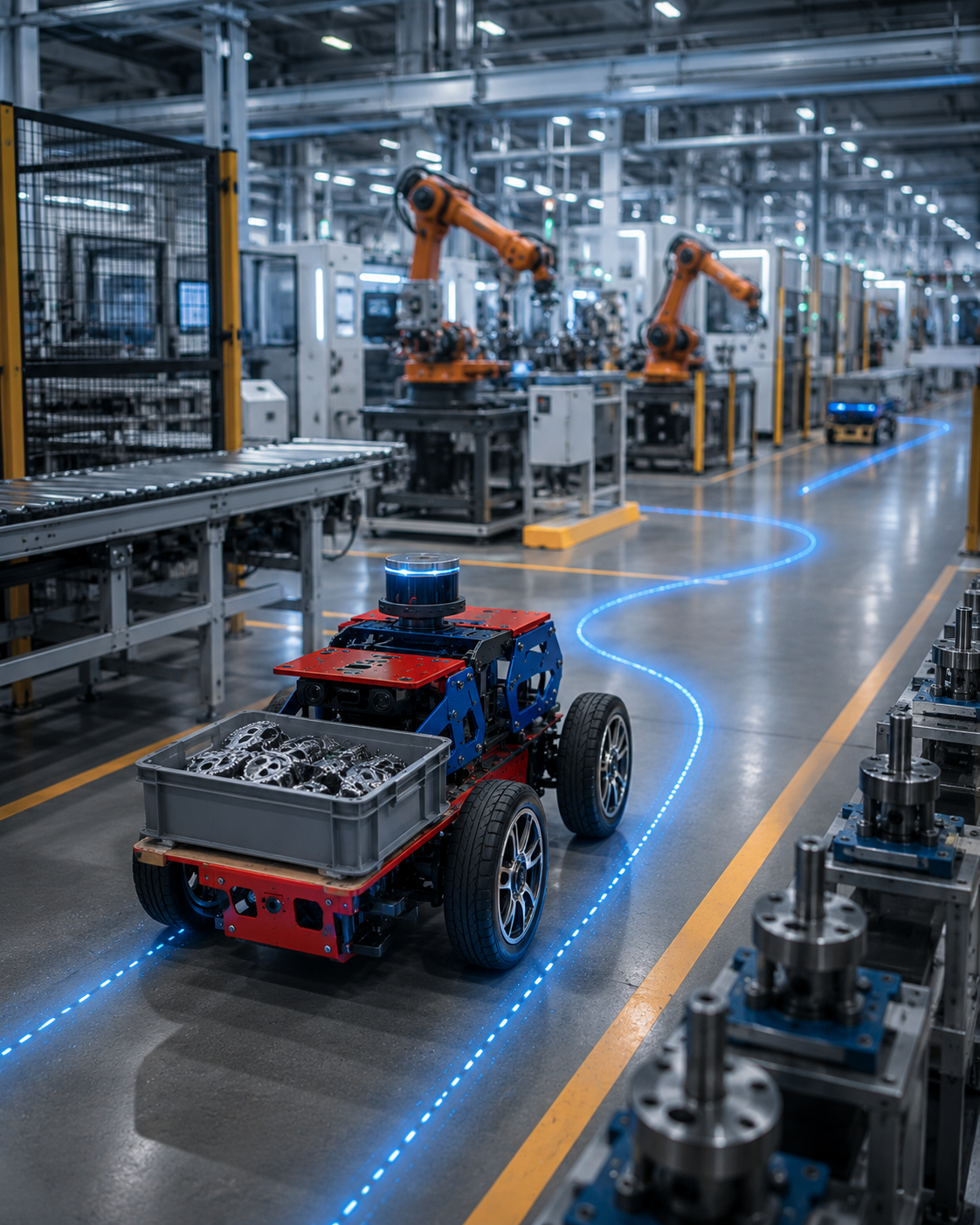
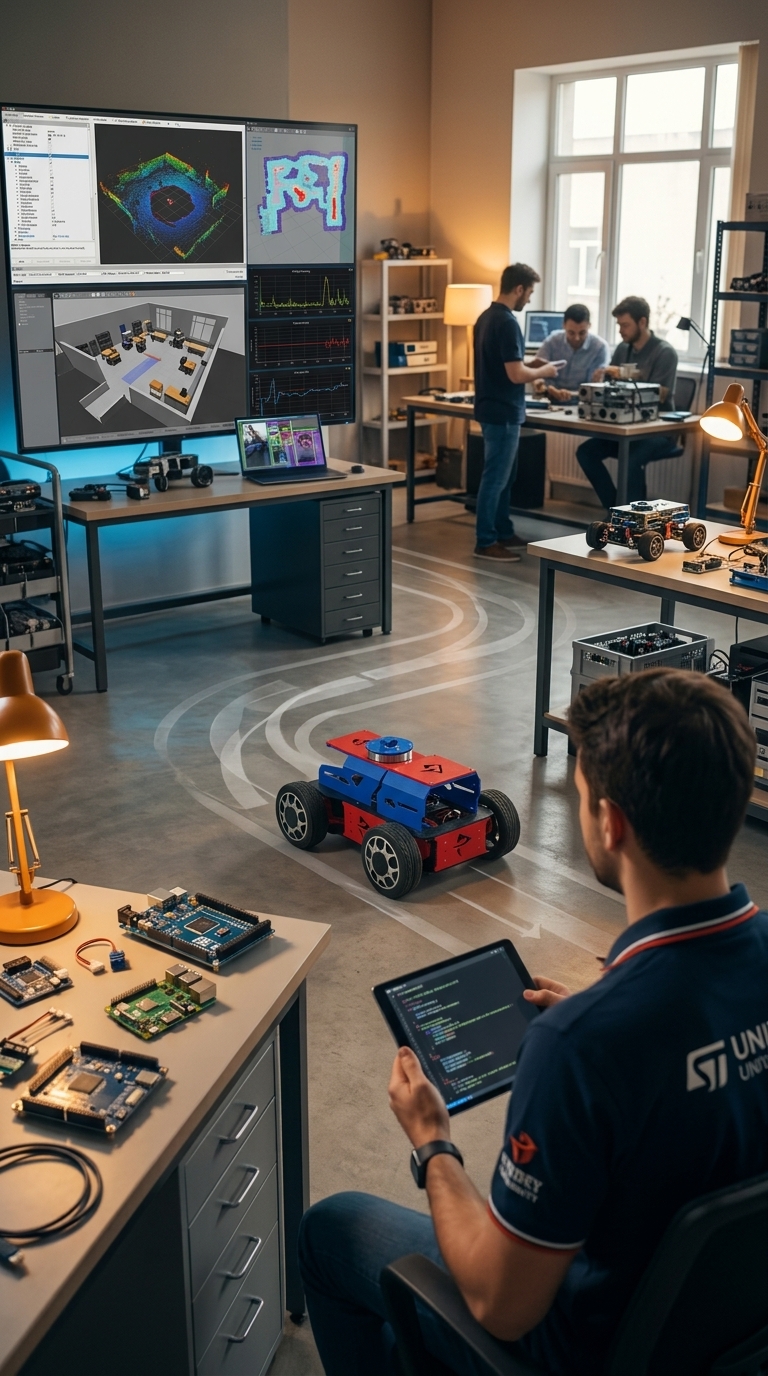
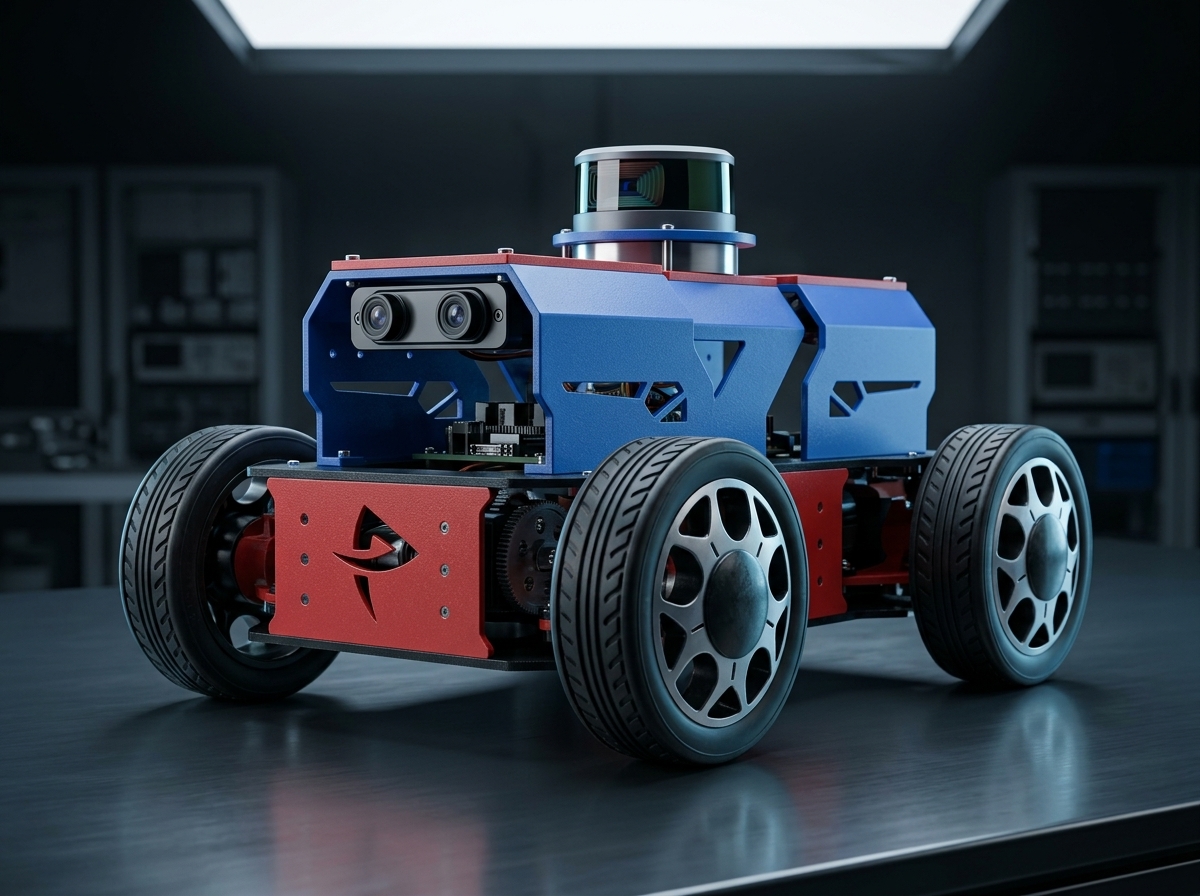
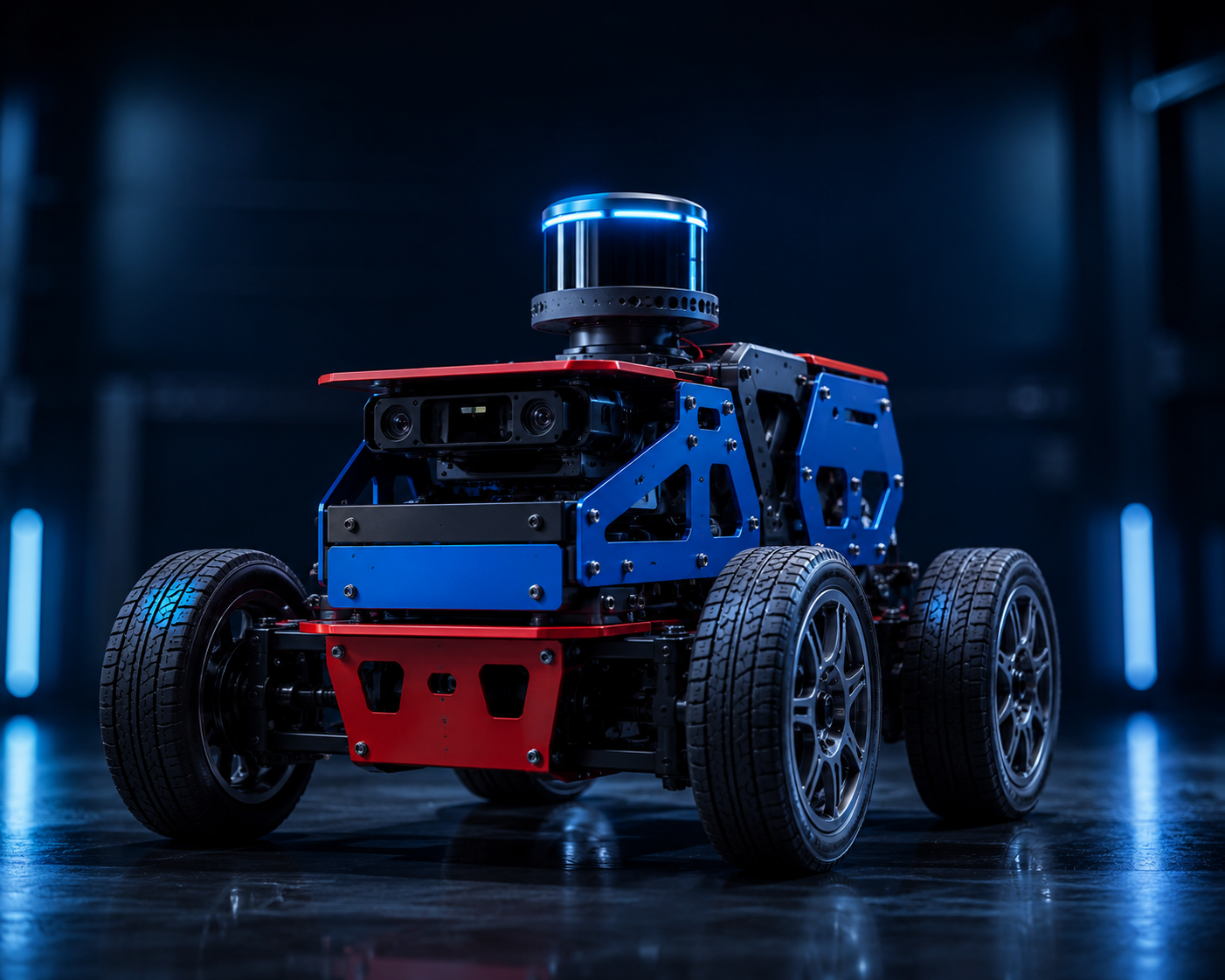
Designed at the intersection of robotics, embedded intelligence, and AI perception, the Pantech Autonomous Mobile Robot combines an Ackermann-steered chassis with STM32 real-time motion control, Raspberry Pi 5 edge computing, and NVIDIA Jetson AI acceleration to deliver precise navigation, intelligent perception, and autonomous decision-making for research, education, and industrial automation.
Where autonomous intelligence meets precision robotics ” a platform combining real-time motion control, LiDAR-based navigation, and edge AI perception for research, industrial automation, and next-generation robotics development.
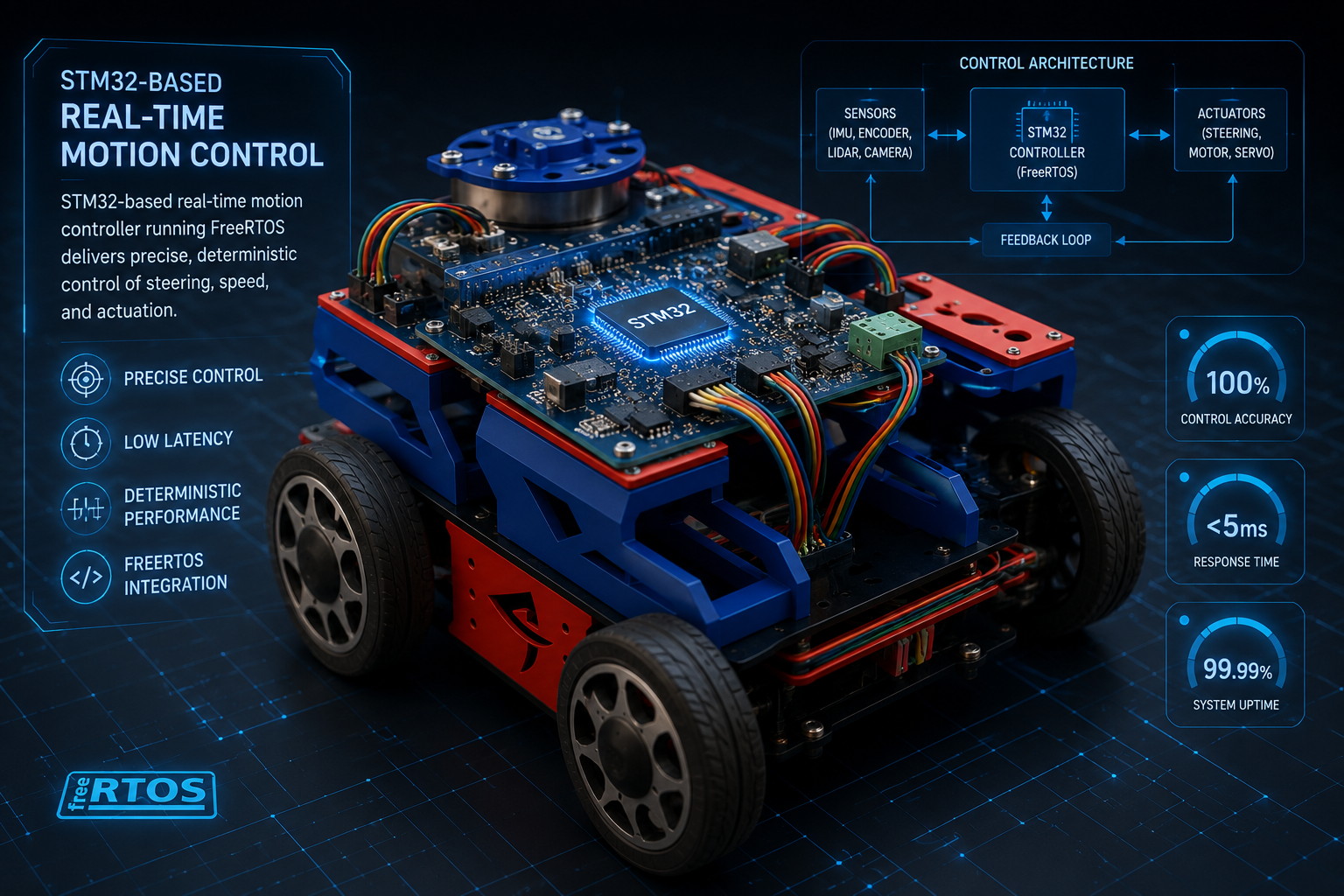
Real-Time Motion Control
STM32 + FreeRTOS deliver deterministic control of steering, speed, and actuation.
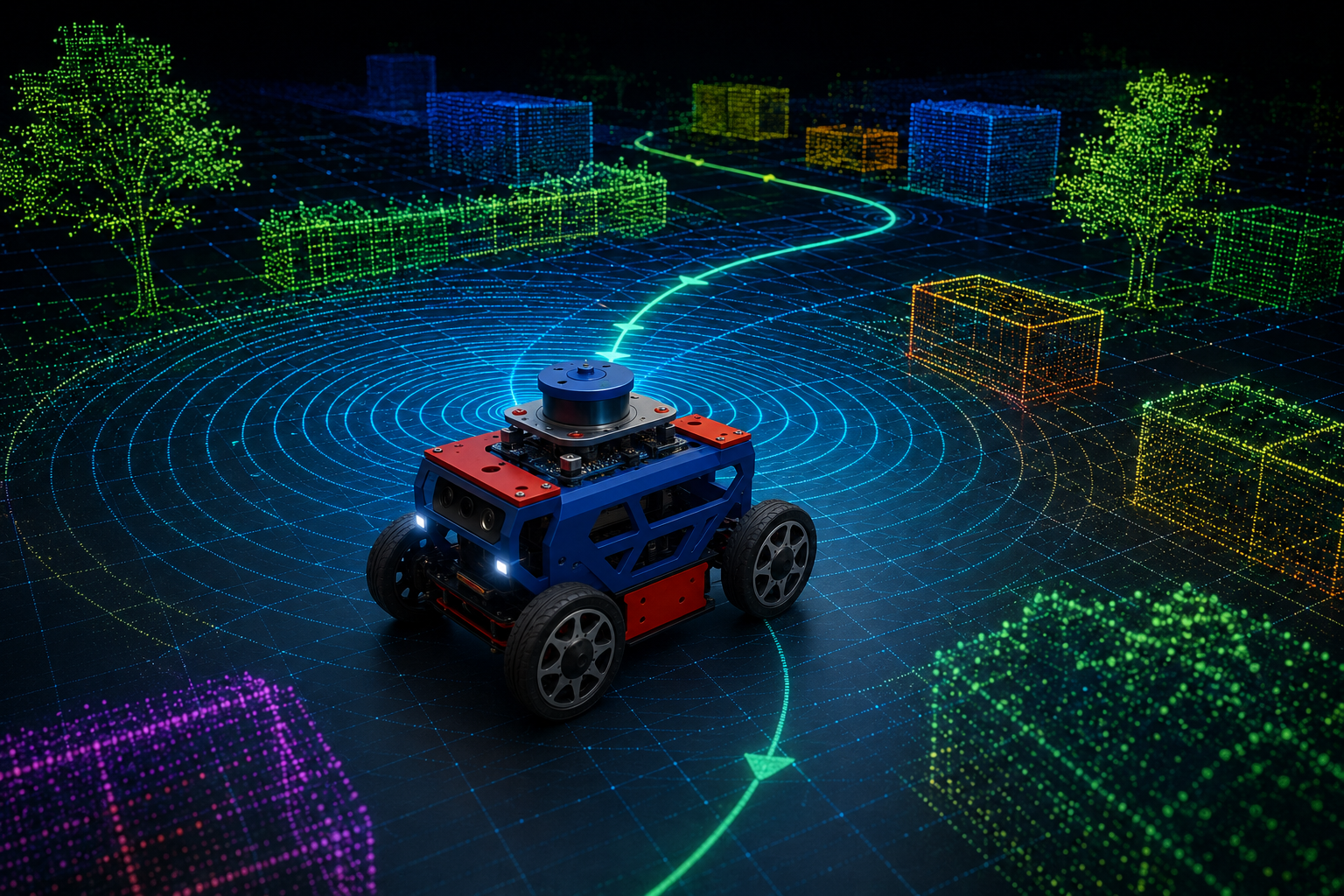
Autonomous Navigation
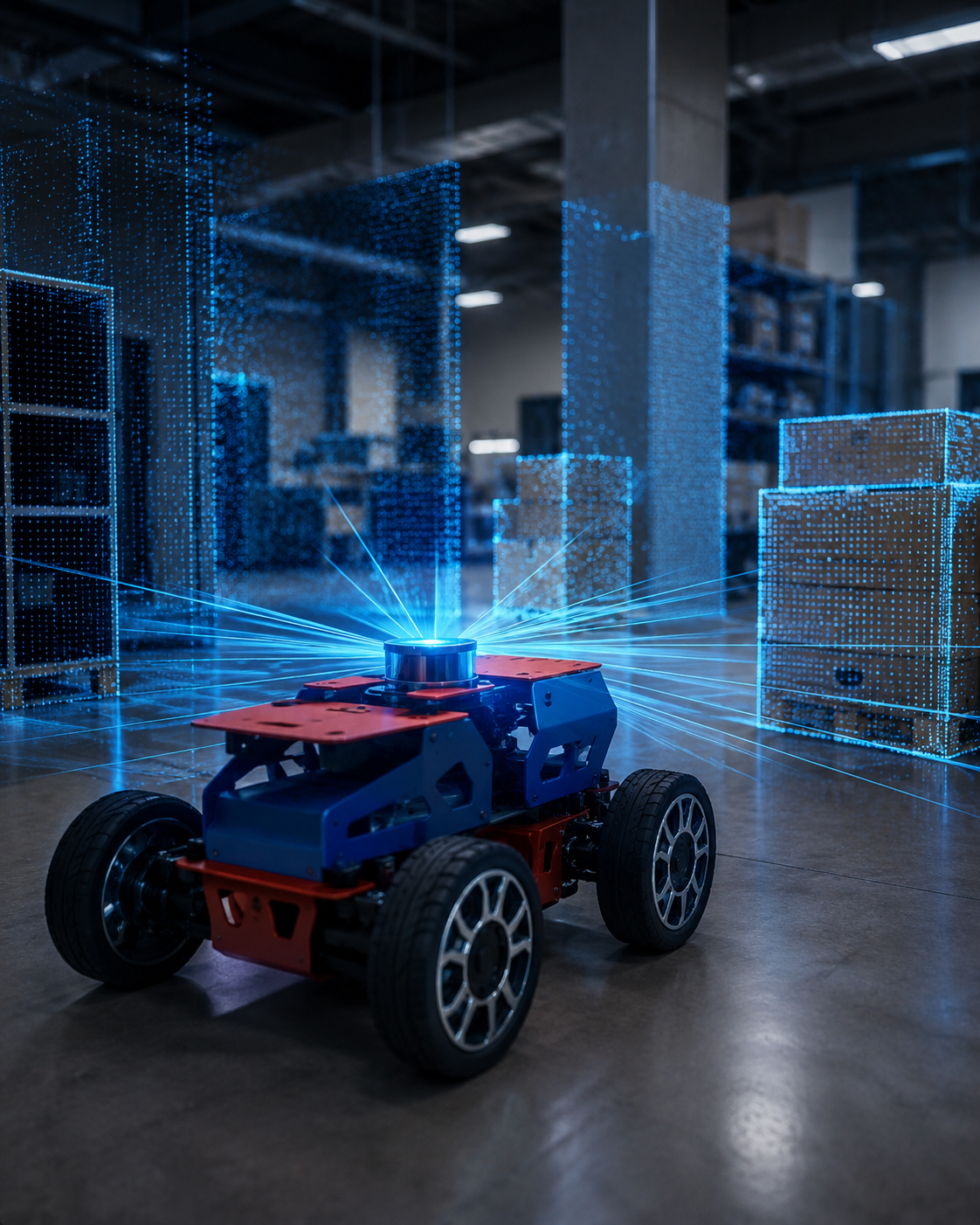
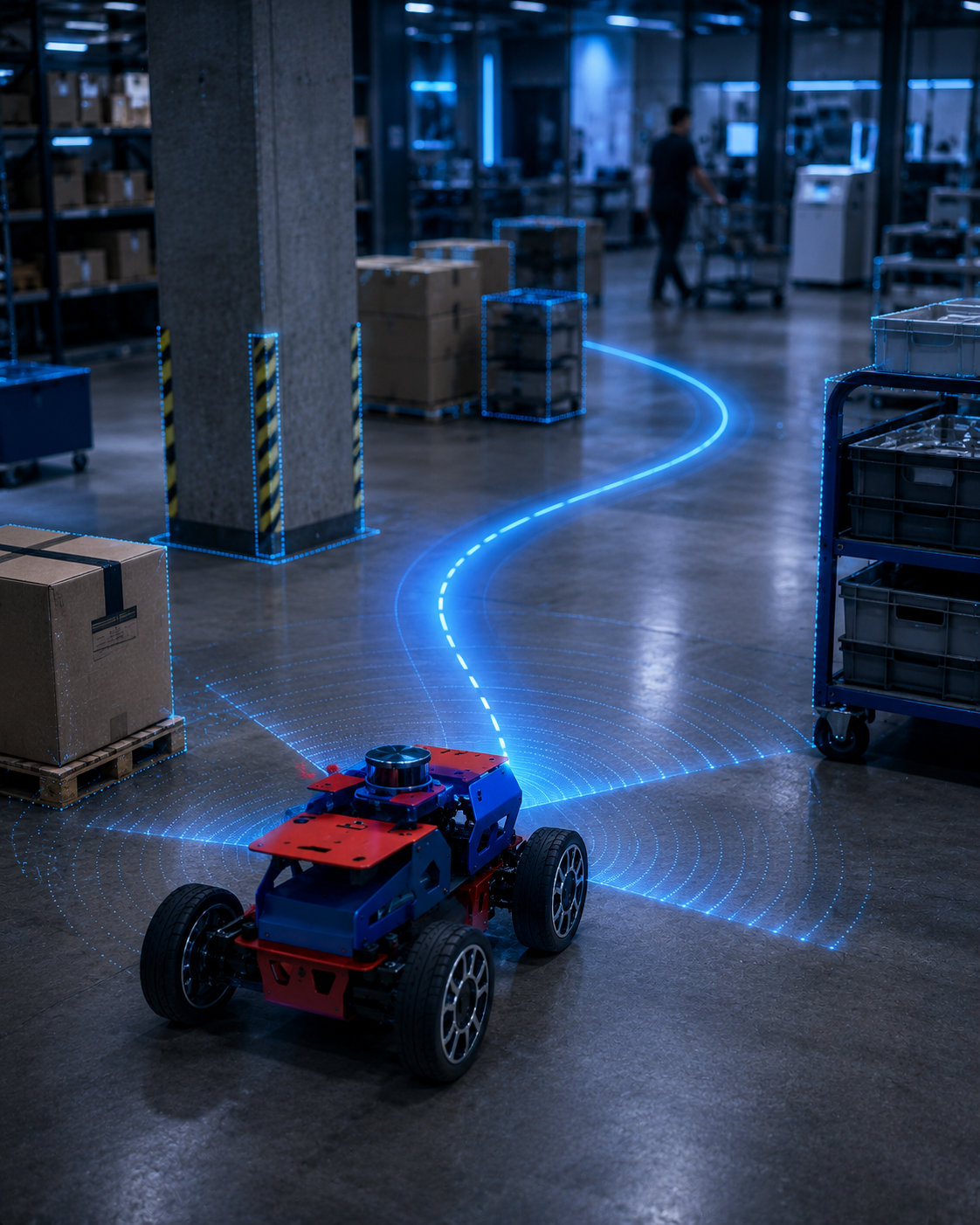
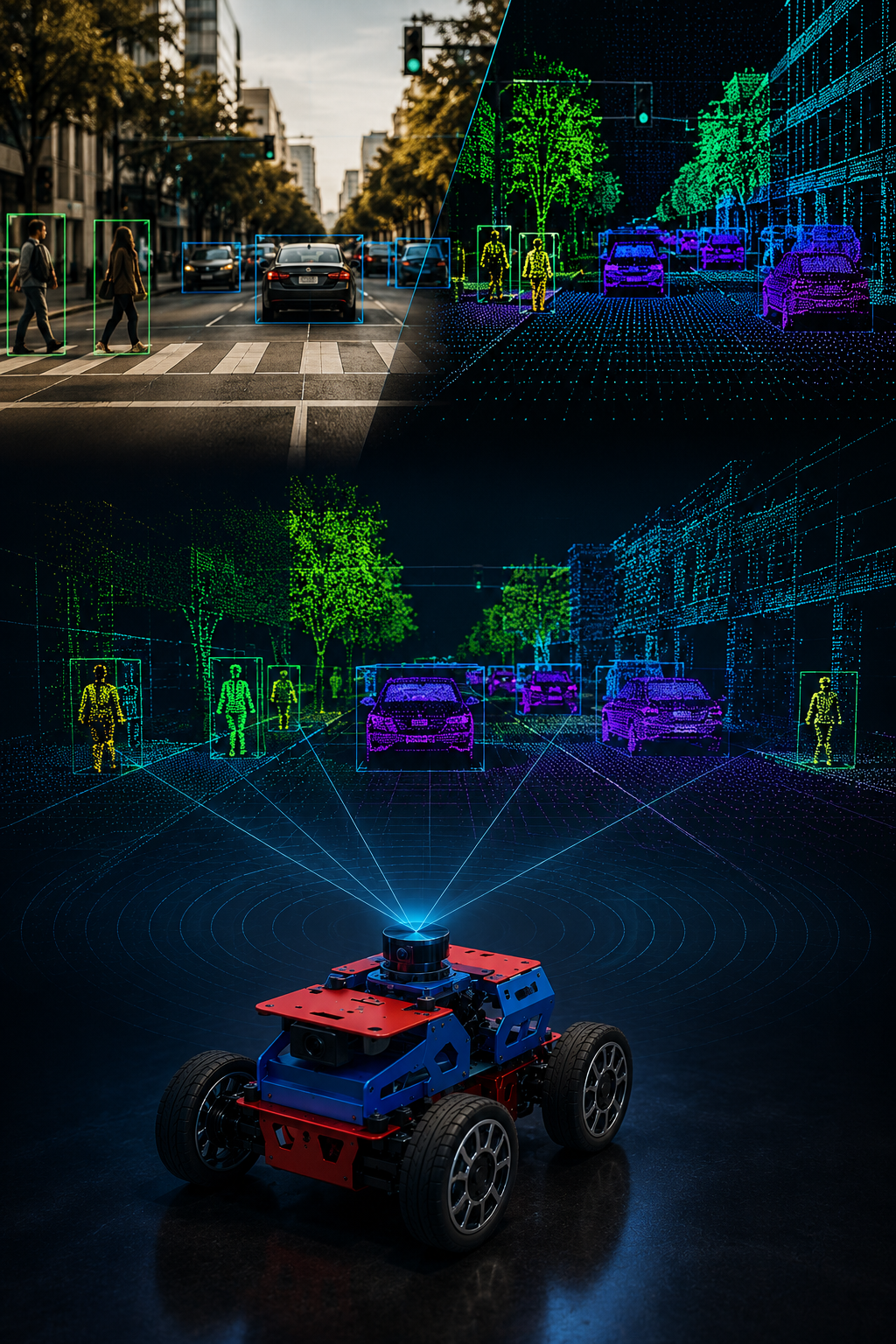
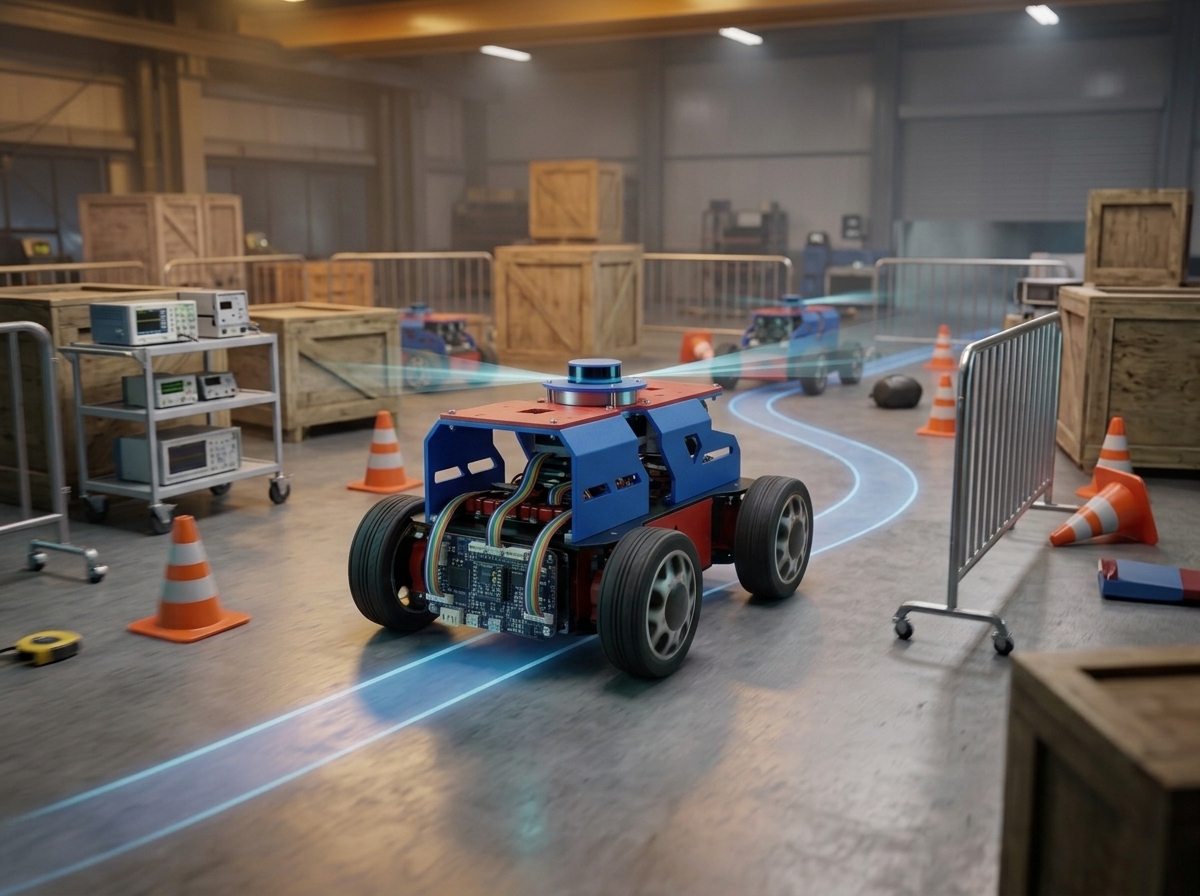
LiDAR-based SLAM, path planning, and obstacle avoidance in dynamic spaces.
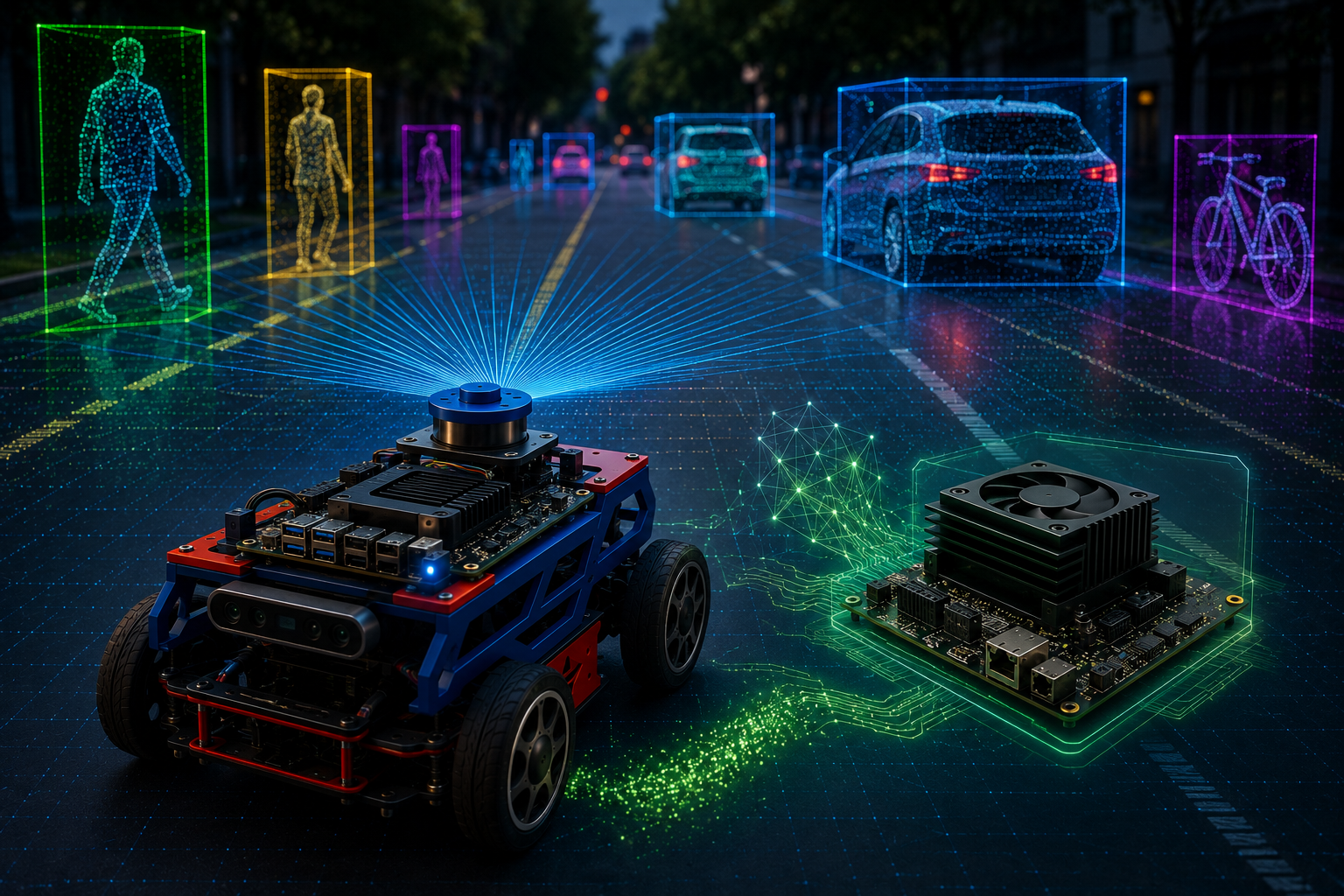
Real-Time Perception
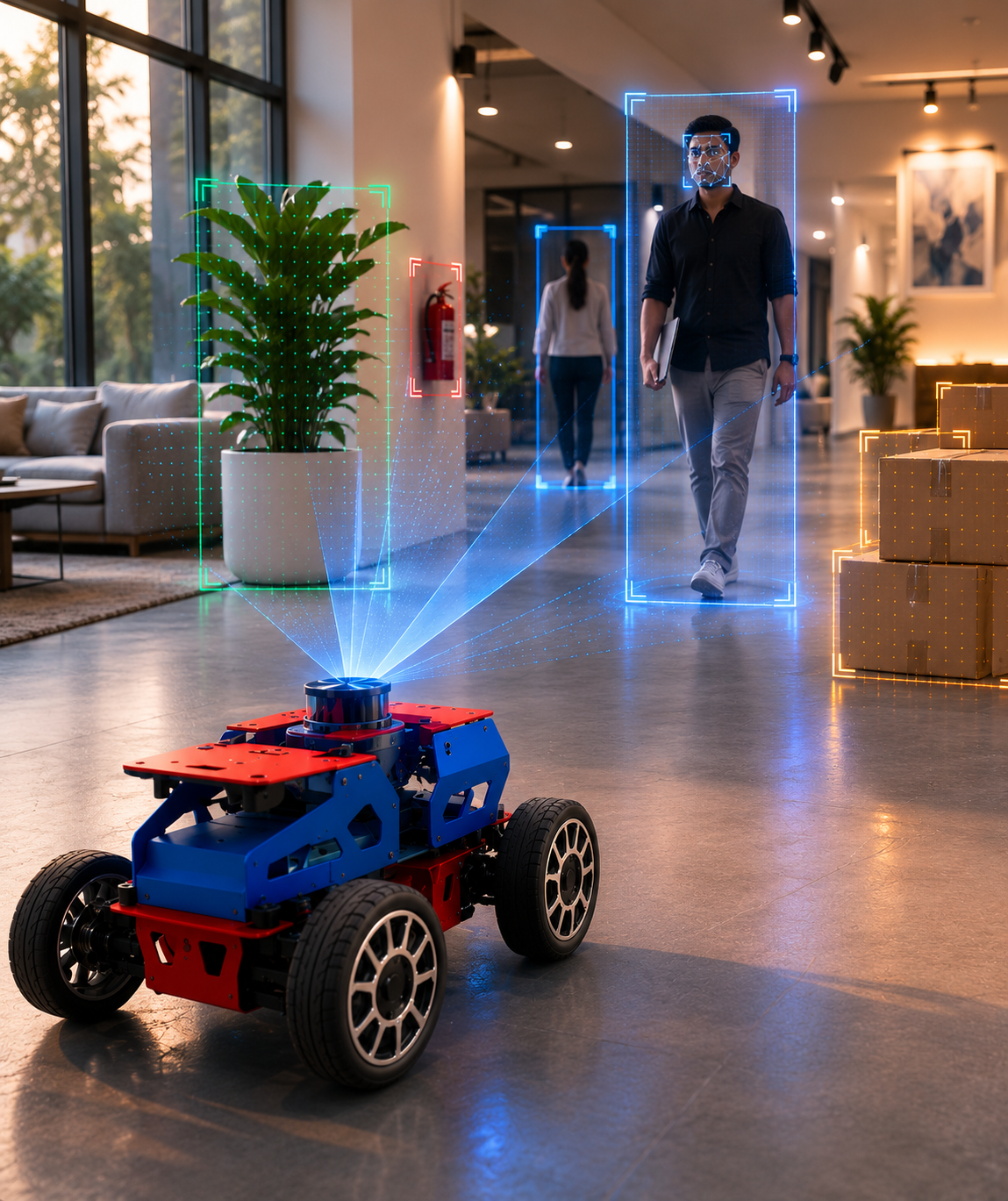
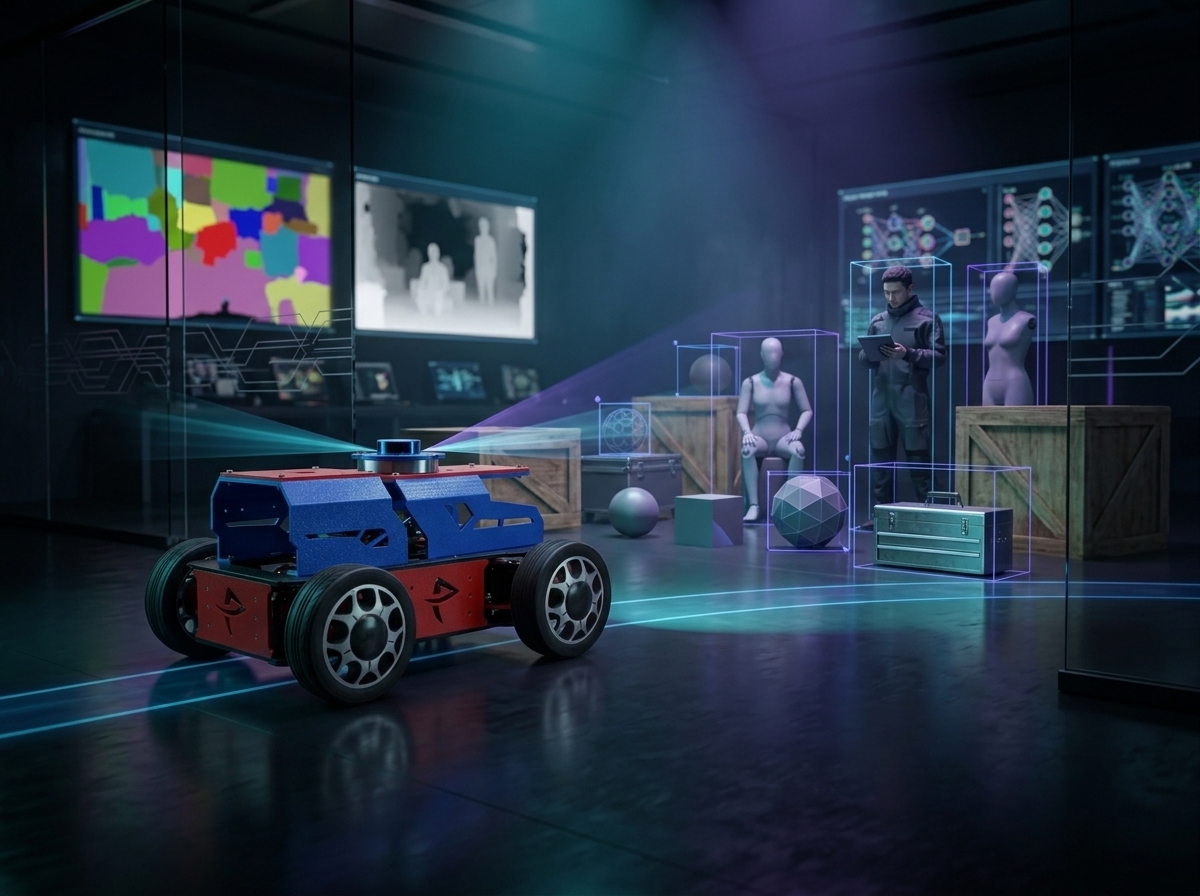
Jetson-powered edge AI for detection, tracking, and recognition.
Precise Motion Control
Cycle-accurate actuation tuned for safe, predictable movement.
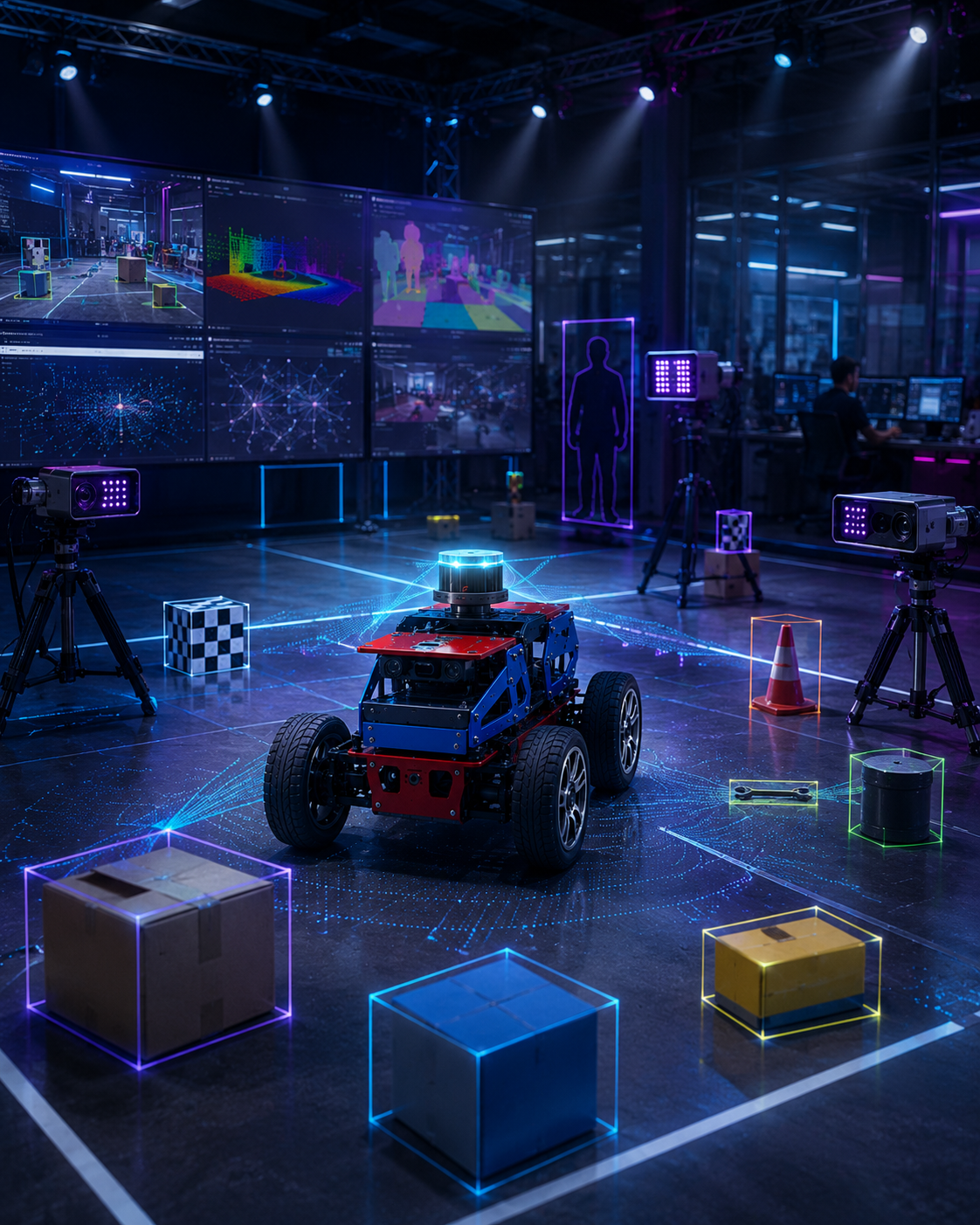
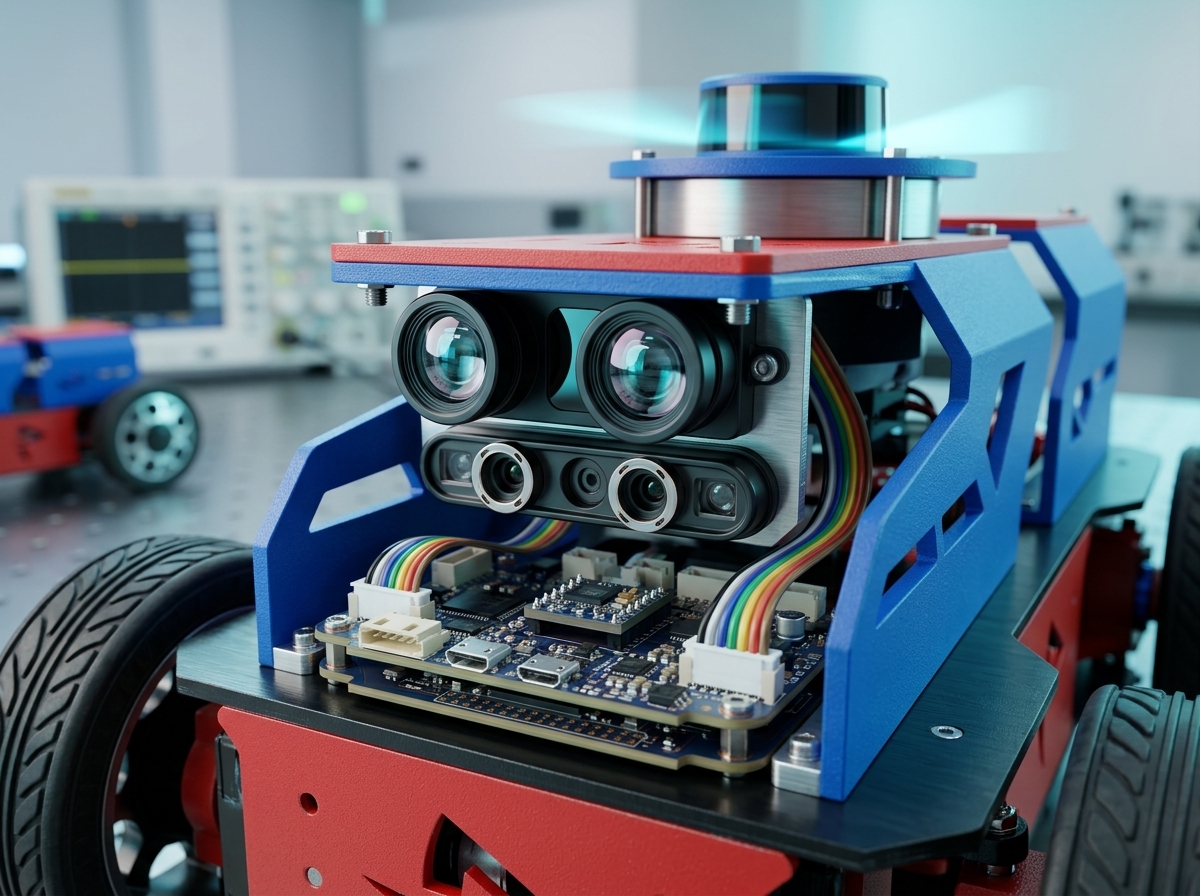
NVIDIA Jetson-powered perception with TensorRT-optimized deep learning models for detection, tracking, and recognition.
Edge AI Perception
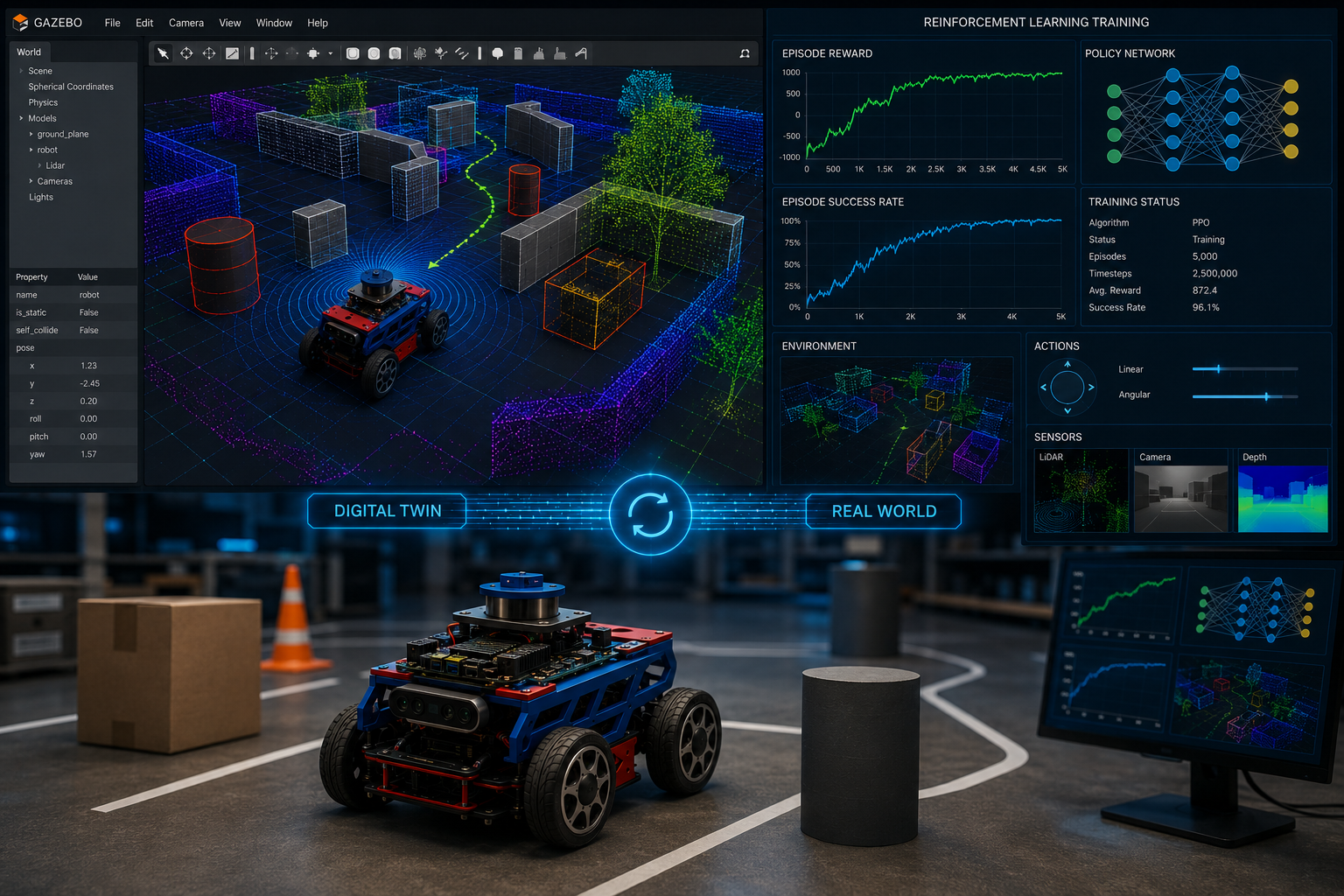
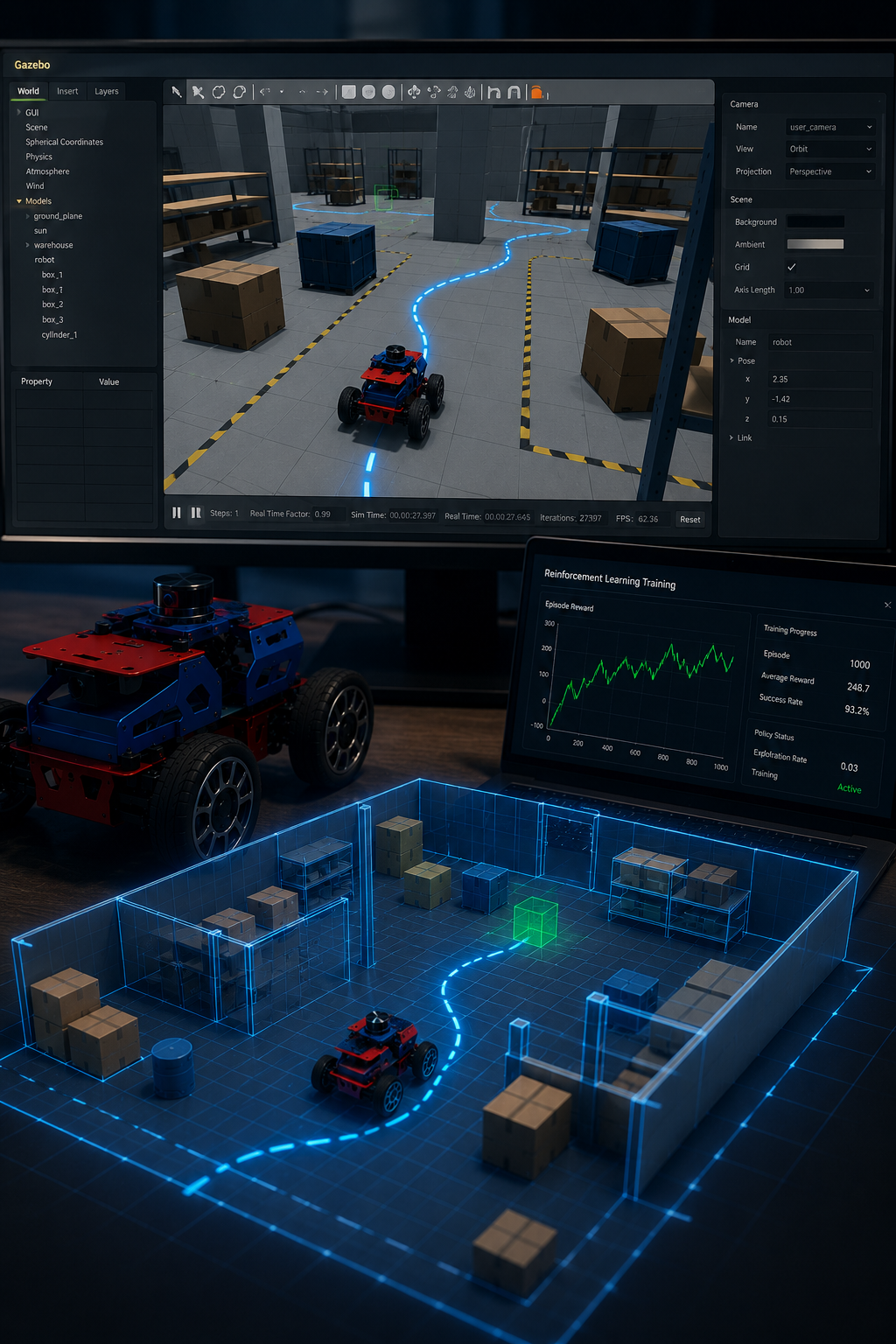
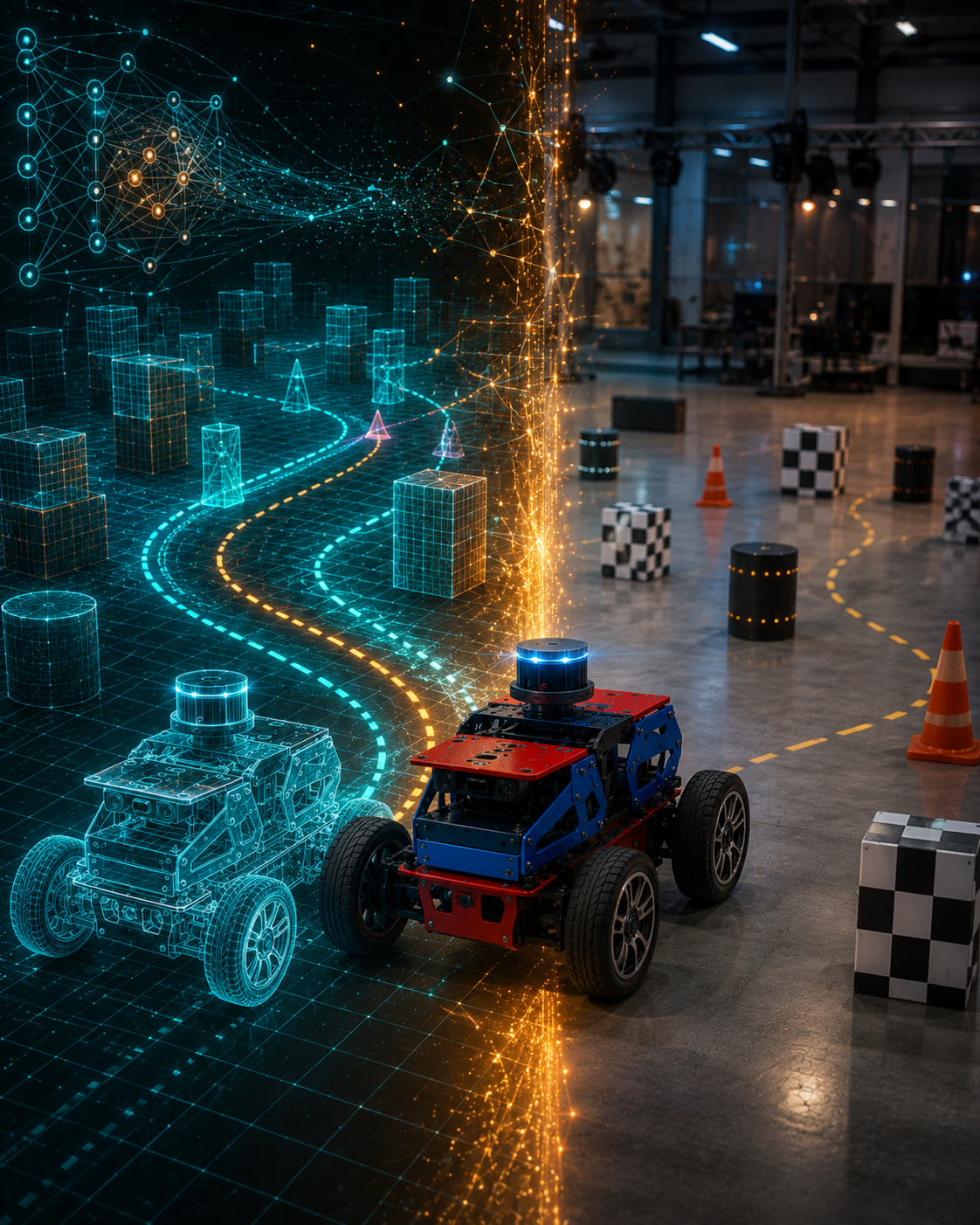
Gazebo digital twin simulation paired with reinforcement learning lets developers train and validate behaviors before deployment.
Digital Twin & Reinforcement Learning
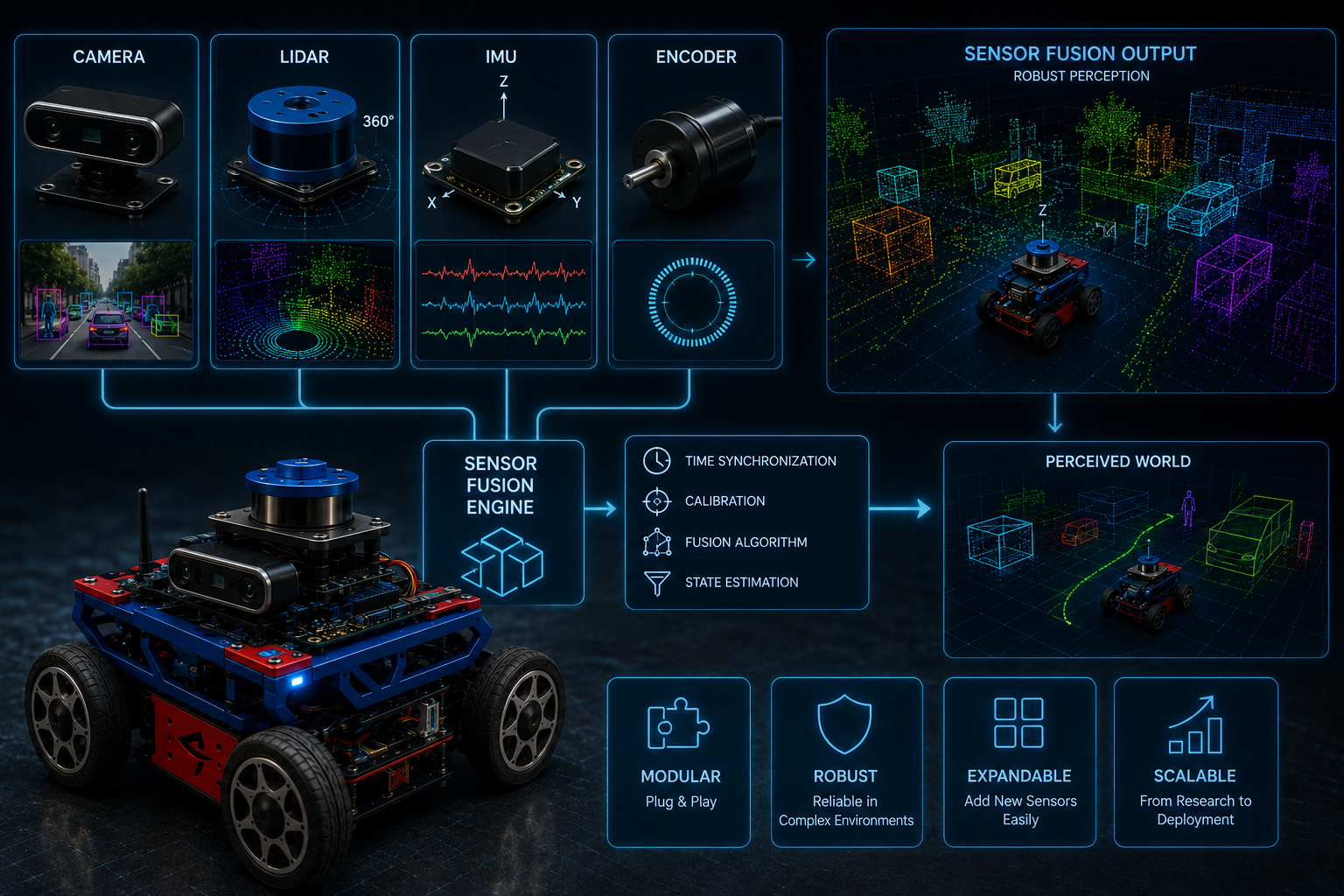
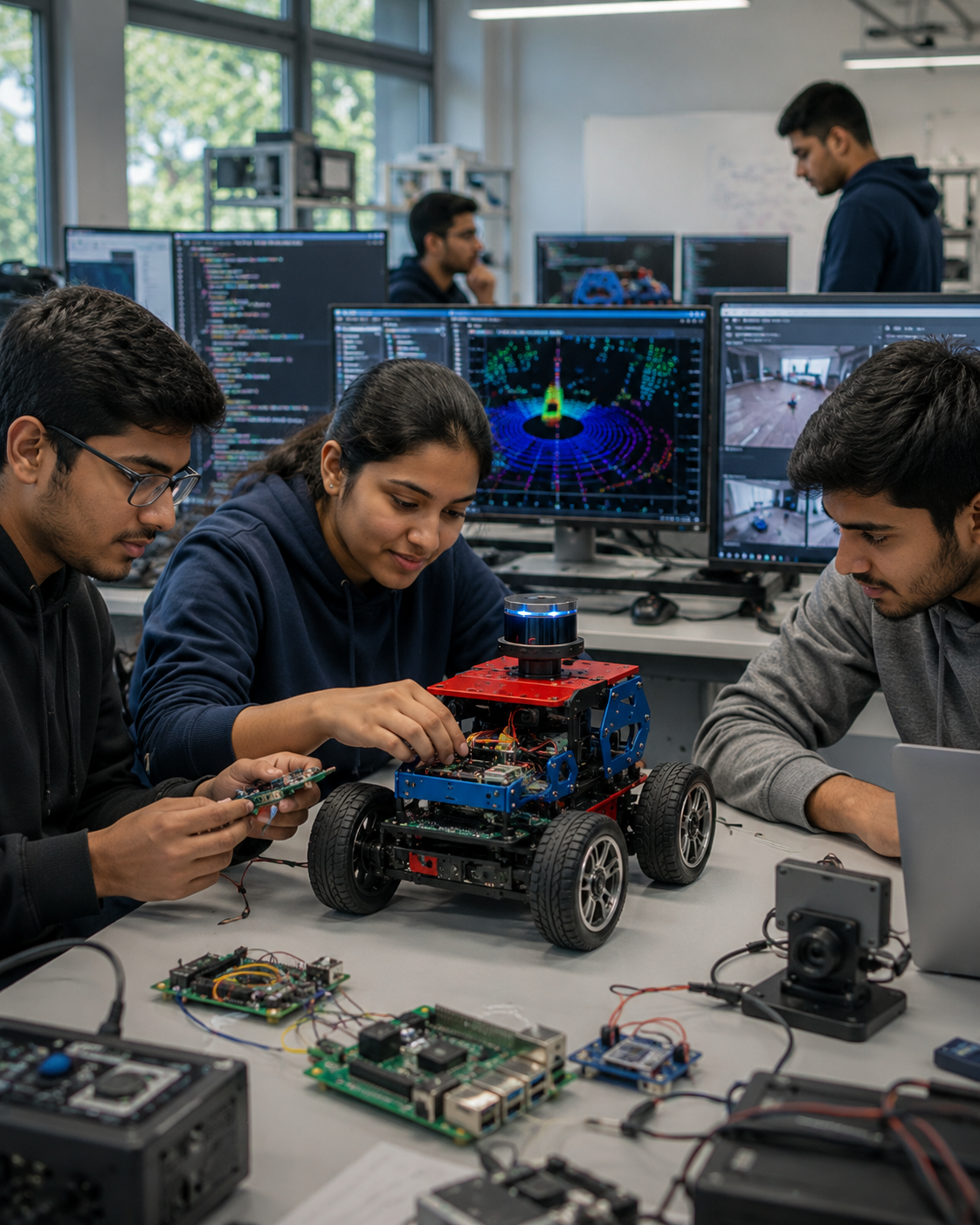
Modular architecture fuses camera, LiDAR, IMU, and encoder data for robust, expandable robotic perception.
Modular Sensor Fusion
AI Inference Load0%
Autonomous Computing Stack
Compute That Thinks Ahead
Our layered computing architecture pairs real-time embedded control with edge AI acceleration, engineered to optimize navigation, perception, and autonomous decision-making across every deployment.
More Than a Robot. A Complete Robotics Development Stack.
From embedded control and edge computing to AI perception, ROS 2 autonomy, and digital twin simulation, Pantech brings multidisciplinary engineering together to create future-ready autonomous robotics platforms.
Embedded Control
STM32, FreeRTOS, motion control
Edge Computing
Raspberry Pi 5, Jetson
AI Perception
Vision, TensorRT, sensor fusion
ROS 2 Autonomy
SLAM, navigation, planning
Digital Twin & RL
Gazebo, reinforcement learning
Media
Product Gallery
Common Questions
Frequently Asked Questions
Answers to what people most often ask about the Pantech AMR platform.
The Pantech AMR-1 is an Ackermann-steered autonomous mobile robot that combines real-time embedded motion control with edge AI computing, built for research, education, and industrial automation.
The onboard LiDAR continuously scans the surroundings to build a live map of the environment while simultaneously tracking the robot's own position within it, enabling reliable localization and path planning in unfamiliar spaces.
Yes. ROS 2 runs as the core middleware, powering navigation, sensor integration, and communication between the robot's software modules.
A layered compute architecture pairs an STM32-based real-time controller for motion with a Raspberry Pi 5 for robotics tasks and an NVIDIA Jetson module for accelerated AI inference.
Yes. Its perception stack supports real-time object detection, human detection, face recognition, and scene understanding, making it well suited for computer vision and applied AI research.
The platform includes a Gazebo digital twin, allowing behaviors to be trained through reinforcement learning and validated in simulation before deployment on the physical robot.
Yes. The modular hardware architecture allows expansion with additional sensors, manipulators, and pan-tilt mounts alongside the existing camera, LiDAR, IMU, and encoder setup.
Yes. Its open, modular software stack and well-documented hardware make it equally suited to classroom robotics education and more advanced industrial automation research.
Ready to Build the Future?
Build the Next Generation of Autonomous Robotics
Discover how Pantech's Autonomous Mobile Robot platform can accelerate research, education, and industrial automation.